Custom French Fry Cones Sizes and Dimensions: How to Choose the Right Fit
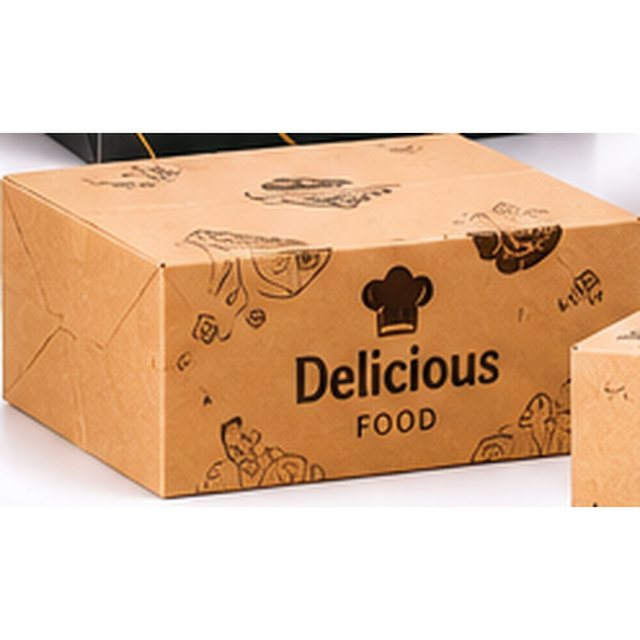
Choosing the size is the first real decision when you order custom french fry cones, and it affects almost everything that follows: how well the product is protected, what the cone costs to make, what it costs to ship and how it looks in the customer’s hands. Get it right and the rest of the project is easy. Get it wrong and you end up paying for filler, reprints or damaged stock. This guide covers how to measure, what the common sizes are, how material thickness changes with size and which mistakes to avoid.
Why size matters
Size affects four things. The first is protection: a product that moves around inside its packaging gets scuffed, dented or broken, while one that is squeezed in can crush the pack or be damaged when the customer pulls it out. The second is cost: board, film and paper are bought by area, so every extra quarter inch on each side adds material to every unit you order. The third is shipping: carriers charge for the space a parcel takes up as well as its weight, so oversized packaging costs more on every order you send. The fourth is appearance: packaging that fits closely looks deliberate, and customers notice excess packaging and tend to judge the brand for it. For custom french fry cones in particular, restaurants, bakeries, cafes and packaged food brands usually work to tight margins, so a size that is right the first time saves real money across a production run.
How to measure for custom french fry cones
Flat printed items are sized as width x height, and the right size depends on the surface or product they are applied to. Follow these steps.
- Identify the flat or evenly curved area available. Avoid tapered sections, ridges and seams, where material will crease or lift.
- Measure the height of that area with a ruler.
- For a round container, wrap a strip of paper around it, mark where it overlaps and measure the strip to get the circumference.
- Decide whether you want full wrap or a front panel only. For full wrap, subtract at least 1/8 in so the ends do not overlap.
- For wraps and sheets, lay the product on a sheet of plain paper, fold the paper around it as you would in use, and measure the sheet that works.
- For tags and hangers, decide where the hole goes and keep artwork at least 1/8 in clear of it.
- Print the size on plain paper, cut it out and try it on the product before you order.

Common sizes and dimensions
The dimensions below are common starting points for custom french fry cones and similar packaging in the custom food boxes range. They are not limits, since every Packlogic order is made to measure, but they are useful for comparing your own measurements with what is typical.
| Size | Typical dimensions | Used for |
|---|---|---|
| Soap band | 8.5 x 1.5 in flat | wraps a 4 oz bar |
| Soap sleeve | 3.25 x 2.25 x 1.25 in | standard bar, open ends |
| Cup sleeve | fits 12 to 20 oz cups | hot drinks |
| Cone sleeve | 6.75 in tall, 2 in top opening | sugar and waffle cones |
| Box sleeve | 6 x 4 x 2 in | over a tray or mailer |
| Bag sleeve | 5 x 3 x 9 in | over a 12 oz coffee bag |
For takeout packaging, size to the portion, including how high the food sits. For retail cartons, the fill weight and the density of the product decide the volume, so test with a filled inner bag before fixing dimensions.
How size affects material choice
Size and material weight go together. Small labels and stickers can use thin film or paper, since there is little area to lift or wrinkle. Larger labels, especially on squeezable or curved containers, need a flexible film such as BOPP so they do not crease. Tags and hangers are normally 14pt to 24pt cardstock; the larger the piece, the heavier the board should be so it hangs flat and does not curl. Wrapping papers are specified by basis weight, with lighter sheets for small or dry items and heavier or coated sheets for larger and greasier ones. Sleeves and bands need enough stiffness to stay in position, so they are usually cardstock, not paper, once they are more than a couple of inches wide.
Allowing for inserts and extras
Other elements on the product change the numbers. Leave room for a barcode, a batch or date code, a tamper seal or a second label on the back. On a small container, front and back labels can be combined into one wraparound label, which is quicker to apply and often cheaper. If the item will be applied by machine, check the roll width, core size and unwind direction your equipment needs before you order, since those are fixed by the machine and not by the design.
Size and shipping cost
Shipping deserves a section of its own. Most parcel carriers in the United States price by dimensional weight when it is higher than actual weight. They multiply length, width and height in inches and divide by a set number, commonly 139. A carton measuring 12 x 10 x 8 in works out at about 7 lb for billing even if it weighs 2 lb on a scale. Trimming an inch from each dimension brings that down to roughly 5 lb. Across hundreds of orders, the saving is significant. Think about three levels: the retail pack, the shipping carton that holds one or more retail packs, and the master case that goes on a pallet. Sizing the retail pack so that a sensible number of units fill a standard shipping carton with little wasted space is one of the easiest ways to cut freight cost.
Sizing for shelves, displays and fulfilment
Where the product is sold also sets limits. Retail shelves have fixed depths and heights, peg hooks need a hang tab and a pack light enough to hang straight, and counter displays hold a set number of units in a set footprint. If a retailer or distributor has given you a planogram or a maximum pack size, use those figures as a ceiling when you plan your custom french fry cones. Online-only brands have more freedom, but marketplaces and fulfilment centres often charge storage and handling by size band, so a pack that slips just under a band limit can cost noticeably less to store and send than one just over it.
Dielines and samples
Once the size is agreed, your supplier produces a dieline: a flat, to-scale drawing that shows every cut, fold, glue area and seal. Print it at 100 percent on plain paper, cut it out and fold it. This rough mock-up takes ten minutes and reveals most problems, such as a flap that is too short to hold, a panel too narrow for the logo or a pack that is taller than it looked in a drawing. For anything fragile, heavy or oddly shaped, follow that with a physical sample in the real material and test it with the product inside: shake it, drop it from table height and stack a few on top of each other.
Sizing mistakes to avoid
- Giving outside dimensions when the supplier expects inside dimensions. State which you mean every time, in writing.
- Measuring without the closure. Caps, pumps, droppers and lids often add half an inch or more.
- Measuring one sample. Products vary between batches. Measure several and use the largest.
- Forgetting the insert or leaflet. Anything that goes in the pack needs space.
- Rounding up “to be safe”. An extra quarter inch on each side leaves the product loose and raises cost.
- Mixing units. Give every measurement in inches or every measurement in millimetres, never a mixture.
Checklist before you order
Before you approve an order for custom french fry cones, run through a short checklist. Have you written the dimensions in the order length, width, height, and said whether they are internal? Have you measured the product with every component fitted? Have you allowed for clearance and for anything else that goes inside? Have you checked the size against your shipping cartons and any shelf or display it has to fit? Have you seen a dieline or template at full size, and ideally a physical sample? A plain, unprinted sample costs very little compared with a production run in the wrong size, and it is the only way to be certain.
Frequently asked questions
Should I get a sample first?
If the product is new, fragile or an unusual shape, yes. Testing a sample with the real product is the surest way to avoid an expensive mistake.
Are dimensions internal or external?
In packaging, dimensions are internal unless stated otherwise, because the inside is what the product has to fit. Always confirm this with your supplier.
How much clearance should I allow?
For a close fit, about 1/16 in per dimension. For faster hand packing or products with labels or bands, about 1/8 in. Inserts and padding need more.
Can I order a size that is not in the table?
Yes. Packlogic makes every order to the dimensions you supply, so any size is possible within the limits of the material.
What is the standard size for custom french fry cones?
There is no single standard. The table in this guide shows the most common dimensions, but the correct size is the one that fits your product with a small clearance.
Summary
Size is the foundation of a packaging order. Measure the real product carefully, give dimensions in a clear order, allow for clearance and extras, and check the result against how you ship and display. Do that, and your custom french fry cones will fit, protect and present the product the way you intended. When you have your measurements, send them to Packlogic with your quantity and we will prepare a quote and a dieline in that size.