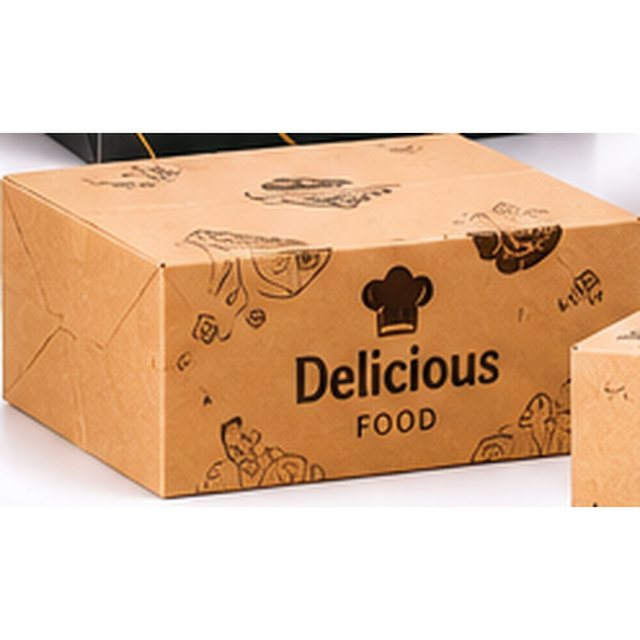
Packlogic produces coffee filter packaging for restaurants, bakeries, cafes and packaged food brands across the United States. Every order is made to the dimensions you give us, so you are not paying for empty space or forcing a product into a stock size. You choose the material, the structure and the finish; we print your artwork and send you a proof to approve before anything goes to press. Below you will find the options in plain terms.
Who uses coffee filter packaging
Most orders for coffee filter packaging come from restaurants, bakeries, cafes and packaged food brands. The right specification depends on how the product reaches the buyer. A pack that sits on a retail shelf needs a strong front panel and a barcode in an easy place. One that ships direct to the customer needs to survive handling. One that is given as a gift needs to open well. Tell us how you sell and we will point you to the structure and material that suit it.
Materials
The material sets the strength, the feel and the print quality of the finished pack. These are the options we use most for coffee filter packaging.
- Food-grade SBS or folding boxboard. White board for retail cartons such as cereal, tea, pasta and bakery boxes.
- Kraft board. For takeout boxes, sandwich packs and natural food brands.
- Grease-resistant coated board and papers. For fried, oily or saucy food. The coating stops stains from coming through.
- Corrugated board. For pizza, cake and catering boxes that have to hold heat and weight.
Styles and structure
The structure you pick affects how the pack opens, how much weight it carries and how fast it can be filled. Common options for coffee filter packaging include tuck end carton, seal end carton, clamshell, tray or boat, window bakery box and gable box with handle. Simple tuck-style and fold-over closures are quick to assemble by hand and cost the least. Locking bases, inserts and two-piece or magnetic constructions add strength and presentation value. If you have a sample of packaging you like, send a photo and the measurements and we can work from that.
Printing and finishes
We print in full-color CMYK and can add Pantone spot inks when a brand color has to match exactly. Printing can cover the outside only or both sides. After printing, a coating protects the surface: gloss makes color brighter, matte removes glare, and soft-touch gives a velvet feel. Extra finishes include foil stamping in gold, silver or other metallics, embossing and debossing, and spot UV, which adds gloss to selected areas such as a logo. Each finish adds cost and some production time, so most brands choose one feature and use it well.
Sizes
There is no fixed size list for coffee filter packaging; every order is cut to the dimensions you supply. The table shows common starting points so you can see what is typical. Use it as a reference, then measure your own product, because containers and products with the same stated capacity often differ by several millimetres.
| Size | Typical dimensions | Used for |
|---|---|---|
| Single pastry or burger | 4.5 x 4.5 x 3.5 in | burgers, muffins, single desserts |
| Sandwich or wrap | 7 x 3.5 x 3 in | sandwiches, hot dogs |
| Bakery box | 8 x 8 x 4 in | half-dozen pastries, small cakes |
| Takeout box 26 oz | 5 x 4.5 x 2.5 in | rice, noodles, sides |
| Retail carton | 7.5 x 2.5 x 10.5 in | cereal and dry goods |
| Catering box | 12 x 12 x 2 in | pizza, platters |
What to check before you order
Anything that touches food directly should be made from food-safe board, inks and coatings. Tell us whether the food is hot, cold, greasy or frozen, because that decides the coating and board. Packaged foods sold at retail also need room for a nutrition panel, ingredients, allergens and net weight.
Custom packaging is worth the effort because small details add up. A pack that fits closely needs less filler and costs less to ship. A panel that states clearly what the product is reduces questions and returns. A consistent look across your range makes each product easier to find the next time a customer shops. None of this requires an expensive specification, only one that has been thought through.
Artwork
For the best print result, supply artwork as a vector PDF, AI or EPS file with fonts outlined and images at 300 dpi or higher. Add 0.125 in of bleed beyond every cut line and keep text at least 0.125 in inside it, so that small movements during cutting do not leave white edges or trim your text. If you do not have a dieline, we will send one in the correct size for your designer to work on.
How ordering works
Ordering is straightforward. Send us the size, quantity, material and any finishes you want, along with your artwork if it is ready. We reply with a quote. Once you approve it, we prepare a dieline, which is the flat template of your pack, and place your artwork on it. You receive a digital proof showing every panel, fold and cut. Nothing is printed until you approve that proof, so check spelling, colors, barcodes and required text carefully. Unit price depends mostly on quantity, size, material and finishes, and it falls as quantity rises because setup costs are shared across more pieces. Minimum quantities and production time vary with the specification, so ask about both when you request your quote.
Questions about coffee filter packaging
What file format do you need for artwork?
A print-ready PDF, AI or EPS file is best, with fonts outlined, images at 300 dpi and 0.125 in bleed. If you need a dieline template, ask and we will send one.
What sizes do coffee filter packaging come in?
Any size. Each order is made to the length, width and height you give us. The size table on this page shows common dimensions, but your own product’s measurements should decide the final size.
Which material should I choose?
It depends on weight and how the product is sold. Light retail items suit standard stock, heavier or shipped items need a stronger build, and gift products often justify a premium material. Tell us about the product and we will recommend one.
Will I see a proof before printing?
Yes. You receive a digital proof on the dieline showing all panels. Production starts only after you approve it.
Can you match my brand colors?
Yes. Give us your Pantone references and we will print those as spot colors or match them as closely as CMYK allows.